Tina Sullivan · 15 September 2026
Crafting Event-Driven Workflows in Cloud Environments Using Integrated Python Tools for Distributed Analytics Systems
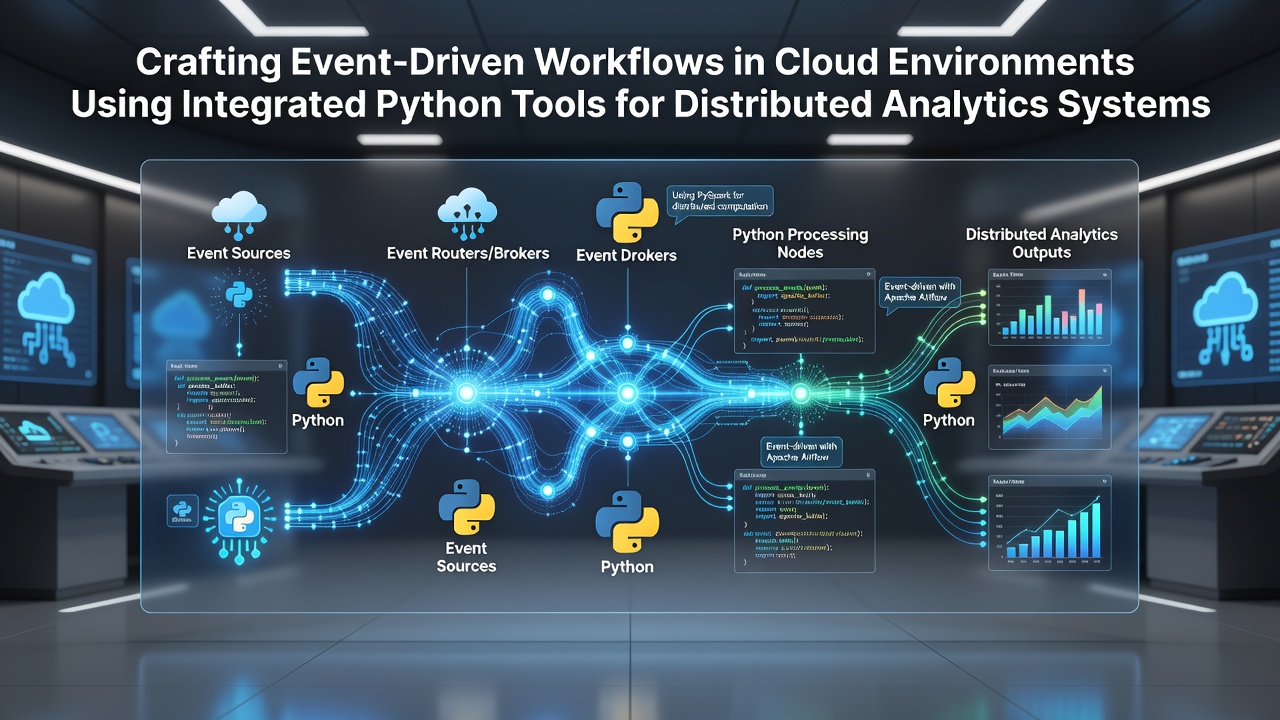
Event-driven workflows have become central to cloud environments where distributed analytics systems process large volumes of data in real time, and researchers continue to examine how integrated Python tools support these architectures across multiple platforms. Systems built around event triggers allow components to respond dynamically without constant polling, while Python libraries such as Celery, Apache Airflow, and Dask connect with cloud services from providers including AWS, Google Cloud, and Azure to orchestrate tasks at scale. Data from the National Institute of Standards and Technology indicates that organizations adopting these patterns report measurable improvements in resource utilization and latency reduction when analytics pipelines handle streaming inputs from IoT devices, log files, and transaction records.
Core Components of Event-Driven Architectures
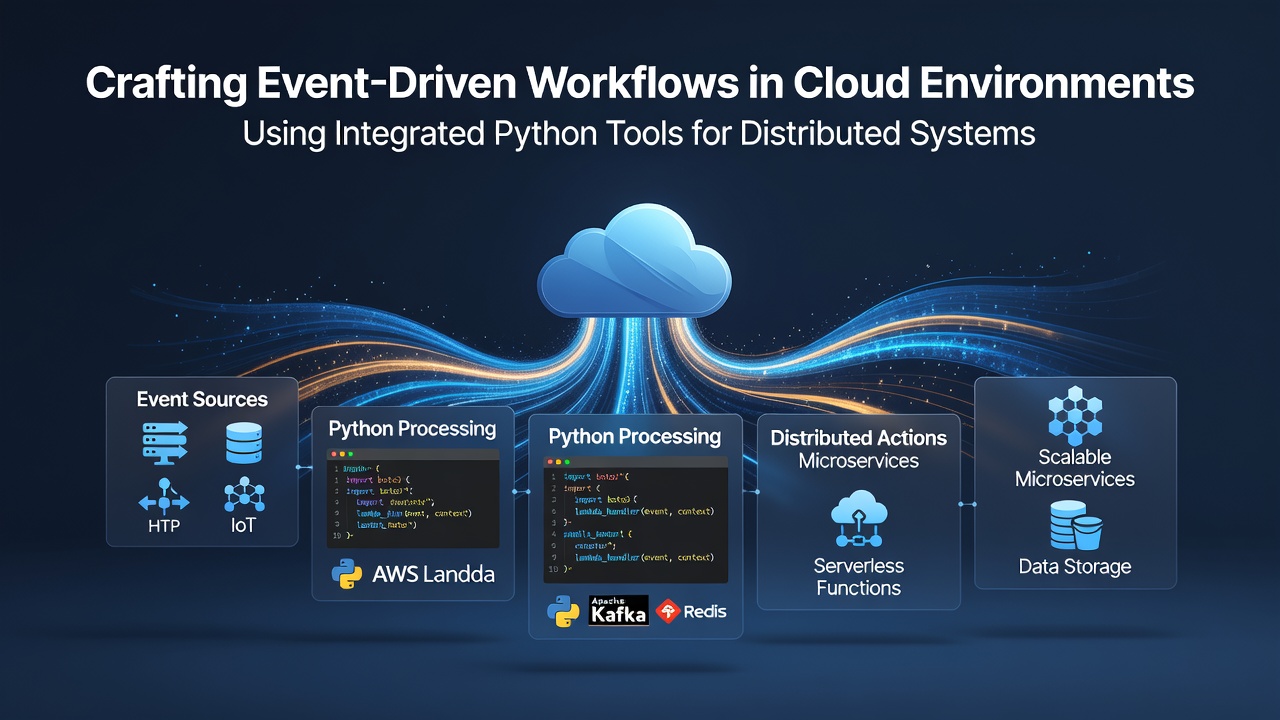
Cloud platforms supply the messaging layers, compute resources, and storage backends that Python tools leverage to build responsive workflows, and experts note that message brokers like Kafka or cloud-native equivalents such as AWS SNS and Google Pub/Sub form the backbone for event distribution. Python frameworks then consume these events through asynchronous handlers, triggering analytics jobs that run across clusters managed by tools like Kubernetes or serverless functions. Observers point out that this combination reduces idle time in distributed systems because tasks activate only when relevant data arrives, and studies from European research consortia have documented throughput gains exceeding 30 percent in production deployments that replaced batch schedules with event triggers.
Python Tools and Their Integration Patterns
Integrated Python libraries enable developers to define workflows as code, and Celery combined with Redis or RabbitMQ handles task queuing while Dask scales computation across cloud instances for heavy analytics workloads. Airflow, meanwhile, orchestrates complex dependencies through directed acyclic graphs that react to external events via sensors or webhooks, and researchers at institutions in Canada have tracked how these setups manage fault tolerance by retrying failed tasks automatically when cloud resources fluctuate. As of September 2026, updates to major Python packages have added native support for cloud event sources, allowing tighter coupling between analytics code and services like Azure Event Grid without custom adapters in many cases.
Configuration typically involves environment variables and connection strings that link Python processes to cloud identity services, and data indicates that security practices such as least-privilege roles prevent unauthorized event access across multi-tenant environments. One study revealed that teams using these integrations achieved faster iteration cycles because code changes deployed through CI/CD pipelines updated both the workflow definitions and the underlying cloud resources in a single step.
Analytics Workloads in Distributed Settings
Distributed analytics systems rely on Python tools to partition data and execute parallel operations, and frameworks such as PySpark or Dask DataFrames process event streams by breaking queries into tasks that run on cloud virtual machines or containers. Event triggers initiate these jobs when new data lands in object storage or databases, while monitoring services track completion and route results to downstream systems for visualization or further processing. Figures from Australian academic reports show that organizations implementing event-driven analytics reduced average query response times by integrating Python-based schedulers with cloud auto-scaling groups that adjust capacity based on incoming event volume.
Challenges arise when latency requirements demand sub-second responses, and engineers address them through in-memory caching layers and optimized serialization formats that Python libraries support natively. Those who have studied production systems note that careful partitioning of event topics prevents bottlenecks, and integration with cloud logging services provides the telemetry needed to tune performance over time.
Implementation Considerations Across Regions
Deployment patterns vary by region because regulatory frameworks influence data residency choices, yet the same Python tools function consistently once cloud accounts are configured correctly. European Union guidelines on data protection require explicit handling of event payloads that contain personal information, and similar requirements appear in other jurisdictions where analytics pipelines must anonymize or encrypt data before processing. Industry organizations have published reference architectures that map Python workflow definitions to compliant cloud services, helping teams avoid configuration drift when expanding across multiple availability zones.
Conclusion
Event-driven workflows built with integrated Python tools continue to shape how distributed analytics systems operate in cloud environments, and ongoing developments as of September 2026 reflect steady adoption across sectors that require timely insights from continuous data flows. The combination of established libraries, cloud messaging services, and scalable compute resources delivers the flexibility needed for modern analytics without reliance on rigid schedules, and evidence from multiple sources confirms that these approaches support both performance and compliance goals when implemented with attention to configuration and monitoring practices.